
NPO The Japan Association for Language Teaching
特定非営利活動法人 全国語学教育学会


第51回全国語学教育学会 年次国際大会/教材展示会
The 51st Japan Association for Language Teaching (JALT) International Conference
Download the Conference Handbook HERE (PDF)
大会ハンドブックのダウンロードはこちら(PDF)
Overview
- How-to-Register
- Conference Theme
- General Information
- Overseas Participants: Visas & Sponsorship
- Offsite Accommodation (JTB)
- Tokyo Guide
- Floor Guide
- Schedule Overview
- Detailed Timetable
- Participant list
- Plenary Speakers
- Featured Panels
- Invited & Featured Speakers
- JALT Sponsors
- Koen Meigi
- Conference System (Indico)
For Conference Inquiries
Click on the speaker’s name to jump to their profiles:
INVITED SPEAKERS
FEATURED SPEAKERS
- Eileen Küpper (Sponsored by ICLE SIG)
- Noriko Nagai (Sponsored by CEFR LP SIG)
- Gary Barkhuizen (Sponsored by University of Auckland, New Zealand)
INVITED SPEAKERS
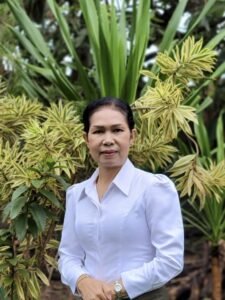
Invited Speaker (Asian Scholar): Ladomchanh Khantry
National University of Laos
Speaker Session: From Barriers to Bridges: A Decade of ASP Impact
Saturday, 1 Nov 2025, 13:20, Room 407
Over the past decade, the Academic Support Program (ASP), implemented through the Laos-Australia National Scholarship and The Asia Foundation, has been instrumental in advancing educational equity in Laos. As the Head Teacher, I have had the privilege of working closely with students from marginalized communities, including those with disabilities, who face substantial social, economic, and structural challenges to accessing higher education.
This presentation reflects on the evolution of the ASP and its comprehensive approach to supporting students. The program integrates English language instruction, IT skills training, soft skills development, personalized counseling, extracurricular activities, and teacher professional development. Through inclusive pedagogy and a flexible curriculum design, ASP has empowered hundreds of students with the confidence and skills necessary to succeed both academically and personally.
A core aspect of the program is its focus on student well-being and resilience, providing not only academic support but also emotional and psychological counseling, mentorship, and community-building opportunities. ASP also fosters a culture of inclusion and equity by providing professional development workshops for educators on inclusive teaching strategies and practices.
As a testament to the power of targeted, student-centered support, ASP has demonstrated how barriers to education can be transformed into bridges for success. This session will discuss the program’s impact and offer a model for replicable inclusive educational practices in resource-constrained settings.
Workshop: Soft Skills and English Language Teaching
Sunday, 2 Nov 2025, 13:10, Room 402
This research investigates the workplace soft skills most needed by graduates from the Department of English, Faculty of Letters, National University of Laos, with a focus on their integration into English teaching. In today’s increasingly competitive job market, graduates are expected to possess not only academic knowledge and language proficiency but also a wide range of soft skills essential for effective communication, collaboration, leadership, and professional growth. The study employed a quantitative research design, using survey data from alumni to identify the most in-demand soft skills and analyze them across gender and age groups. The findings reveal significant gaps between the soft skills emphasized in the current English curriculum and those expected in the workplace. Key areas lacking include human skills, self-confidence, work ethic, personal organization, personal organization and time management, and leadership. To address these challenges, the study provides practical recommendations for implementation. These include integrating soft skills explicitly into English language courses, updating teaching methods to promote active learning and communication, strengthening teacher training, and providing student support services focused on soft skills development. The research highlights the need for a more holistic approach to English education that aligns academic instruction with real-world expectations. These insights are valuable for educators, administrators, and policymakers working to improve graduate employability and the quality of English language education in Laos.
Speaker Bio
Ladomchanh Khantry currently leads the English Department at the National University of Laos. With 30+ years of experience she directs the Laos-Australia Academic University support programs, where for 10+ years she has advocated for agency and autonomy through participatory curriculum design, personalized counseling, and mentorship initiatives, for teachers and mainly female scholarship minority ethnic group students, and for students with disabilities. Additionally, she has helped to organize 19 LaoTESOL conferences.
Invited Speaker (Kevin Cleary): Kinsella Valies
Affiliation: Jissen Women’s University and Aoyama Gakuin University

Speaker Session: Collaborative Research: Trials and Triumphs
Saturday, 1 Nov 2025, 17:00, Room 402
In today’s globally connected academic landscape, collaboration among language educators is both a strategic necessity and a rich source of innovation. By working as research duos or teams, scholars can enhance their research capabilities (Glebova, 2024). In other words, combining different skill sets and resources can help teams tackle complex challenges that exceed what individuals can handle alone. This 25-minute presentation addresses the practical, interpersonal, and intercultural dimensions of building successful research partnerships between colleagues in higher education.
Focusing on what should and should not be done to ensure effective collaboration, the talk explores key questions such as: Should you partner with someone who shares your style and research interests, or seek out a colleague whose knowledge and skills complement your own? Is it better to form a tightly coordinated partnership or to build a larger, more diverse team? What are the benefits and potential drawbacks of collaborative scholarship—especially across cultures, institutions, and disciplines?
With particular attention to diversity, intercultural communication, and complementary expertise, the presentation draws on empirical literature and personal experience to offer guidance. Topics covered include selecting the right partner(s), negotiating project roles and authorship, managing differing communication styles, and maintaining long-term collaboration across institutional and cultural boundaries.
Designed for early-career and experienced researchers, this session highlights how collaboration, done well, can deepen pedagogical insight, and foster a more inclusive, innovative academic culture. Attendees will leave with concrete tools and questions for reflection that they can use to initiate or improve their research partnerships in linguistics and EFL.
Workshop: Co-creating Research: Are You an Effective Team?
Sunday, 2 Nov 2025, 14:00, Room 402
According to Wenger et al. (2002), communities of practice “are the result of continuous processes of learning in which individuals engage and sustain through time.” It can be said that collaborative research starts at the community-oriented level and moves to the practice-oriented level (Córdoba and Robson, 2005) as research goals are formed.
In this interactive and reflective, 60-minute workshop, participants will explore the interpersonal and intercultural dimensions of research collaboration. Building on the presentation “Collaborative Research: Trials and Triumphs,” this session will introduce practical tools for forming, maintaining, and reflecting on academic partnerships.
The workshop focuses on collaborative dynamics such as selecting partners with complementary strengths, co-defining project roles, navigating power imbalances, and fostering equitable authorship practices. Participants will engage in structured pair and group activities, including a brainstorming session, a “Collaboration Style Match” exercise, a discussion, a “Conflict Mapping” scenario roleplay, and a reflective dialogue.
By integrating core principles of diversity, equity, and inclusion (DEI), the workshop empowers participants to approach research collaboration as a culturally responsive practice. Whether their context includes working across departments, institutions, or continents, attendees will leave with a clearer understanding of how to build resilient, respectful, and productive academic relationships. Designed for early-career researchers and seasoned scholars alike, the session combines reflection, dialogue, and strategic planning in an energizing format. Participants may gain valuable insights into fostering trust and achieving shared success in their collaborative endeavors.
Speaker Bio
Kinsella Valies is an Assistant Professor at Jissen Women’s University and Aoyama Gakuin University. With a background in Cinema and Photography, TEFL, and Applied Linguistics, her research interests include filmmaking in the classroom, speaking assessment, and Black Women’s experiences in Japan. A dedicated contributor to JALT, she has held numerous leadership roles and is currently chairing the Nominations and Elections Committee. Her recent work includes JSPS-funded research on student empowerment through film festivals.
FEATURED SPEAKERS
Eileen Küpper (Sponsored by ICLE SIG)
Bonn-Rhein-Sieg University of Applied Sciences

RESEARCH-ORIENTED PRESENTATION
Simulating Global Collaboration in Language Learning
Saturday 1 Nov 2025, 11:00, Room 417
How can we foster authentic language learning, intercultural awareness, and entrepreneurial thinking in a single classroom? This talk presents a decade-long virtual exchange project that connects students from Germany, Jordan, and Kosovo in a structured intercultural business simulation. German students develop startup concepts and collaborate online with peers abroad to explore cultural differences in markets, marketing, and social entrepreneurship. Students communicate entirely in English, navigating variation in language proficiency, communication styles, and differing cultural expectations.
The project is structured over five phases and culminates in a “Dragon’s Den”-style final presentation where students pitch their ideas, incorporating feedback from their international partners. Through this process, learners develop practical business English skills, gain insights into global communication, and engage with sustainability from multiple cultural perspectives. Challenges—such as varying commitment, or cultural assumptions—become powerful intercultural learning opportunities.
This session will share the pedagogical framework, sample tasks, and observed outcomes in language use, cultural sensitivity, and collaborative problem-solving. Attendees will leave with concrete ideas for adapting similar simulations to their own teaching contexts—whether focused on English for specific purposes (ESP), intercultural communication, or global citizenship education
PRACTICE-ORIENTED WORKSHOP
From Simulation to Skill: Student-Centered
Saturday 1 Nov 2025, 14:30, Room 417
What happens when students take the lead in building intercultural understanding through language? This workshop explores student-centered simulation as a powerful tool for language development, global competence, and reflective learning. Based on the Intercultural & Social Entrepreneurship Exchange (ISEE)—a long-running international collaboration between students in Germany, Jordan, Kosovo, and China—participants will explore how learners design, adapt, and reflect on fictional business ideas across cultural boundaries.
The workshop guides attendees through sample activities where students act as entrepreneurs, collaborators, and cultural analysts. Participants will engage in a brief simulation, consider the role of cultural difference in shaping communication and teamwork, and explore how learners synthesize theory and experience through final presentations and guided cultural reflection.
Discussion will focus on how such simulations promote language use in authentic, purposeful tasks, build intercultural awareness, and encourage learners to take ownership of their progress. Attendees will also receive low-threshold, adaptable templates, reflection prompts, and a project planning framework to design their own intercultural experiences with minimal resources.
Whether you’re teaching business English, CLIL, general EFL, or global citizenship, this session will offer practical, student-centered strategies for fostering meaningful cultural engagement and language growth.
SPEAKER BIO
Eileen Küpper is a Senior Lecturer in Intercultural Communication and English at the Language Center of the University of Applied Sciences Bonn-Rhein-Sieg, Germany. Her academic interests include international exchange, intercultural business communication, and diversity management. She actively develops summer schools in underrepresented study-abroad destinations and promotes low-threshold internationalisation at home to enhance students’ intercultural competence, support inclusive student development, and broaden perspectives on global academic engagement.
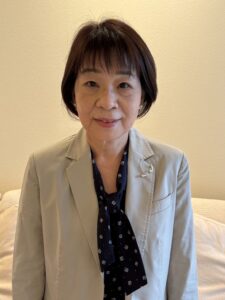
Noriko Nagai (Sponsored by CEFR LP SIG)
Ibaraki University
RESEARCH-ORIENTED PRESENTATION
An Ecological Perspective on the CEFR: Conceptual Foundations and Pedagogical Implications
Saturday 1 Nov 2025, 18:45, Rom 402
Despite the CEFR’s global recognition as a framework for language education, its foundational principles—such as viewing the learner as a social agent and adopting an action-oriented approach—are often underutilized in classroom practice. This talk offers a reinterpretation of the CEFR through an ecological lens, drawing on van Lier’s (2004) perspective of language learning as a situated, dynamic, and collaborative process of sense-making. By emphasizing the CEFR’s conceptual rather than evaluative function, the presentation highlights its potential to support more holistic and context-sensitive pedagogical practices. It argues that embracing the CEFR as a flexible guide, rather than a rigid evaluative tool, can enrich language teaching and learning across diverse educational settings.
References
van Lier, L. (2004). The ecology and semiotics of language learning: A socio-cultural perspective. Kluwer Academic Publishers.
PRACTICE-ORIENTED WORKSHOP
Bridging Theory and Practice: Task Design with CEFR Mediation Descriptors
Saturday 1 November 2025, 12:10, Room 417
This workshop first demonstrates how to apply the cognitive mediation descriptors from the CEFR to design tasks and scaffolding strategies for a project-based English course. The aim is to foster collaborative sense-making and enhance learners’ cognitive competences by encouraging them to articulate their own ideas clearly and engage constructively with others’ perspectives. Then, participants will engage in hands-on, collaborative activities to adapt selected mediation descriptors to their own teaching contexts. By the end of the session, participants will have practical tools and ideas for integrating mediation into their course design in meaningful and context-sensitive ways.
SPEAKER BIO
Noriko Nagai is Professor Emerita and Senior Research Fellow at Ibaraki University. She holds a Ph.D. in Linguistics from the University of Michigan and taught at Duke University. At Ibaraki, she led English program reforms aligned with the CEFR and conducted JSPS-funded research on CEFR integration in Japanese higher education. She co-authored CEFR-informed Learning, Teaching, and Assessment and co-edited Putting the CEFR into Practice through Action Research.
Gary Barkhuizen
Sponsored by University of Auckland, New Zealand

RESEARCH-ORIENTED PRESENTATION
Revisiting the case method in language teacher education: Student teachers’ experiences
Saturday 1 Nov 2025, 18:45, Room 514
The ‘casebook method’, as used in law and business education, has been advocated on and off in language teacher education for the past 30 years. In this presentation, I make a strong case for revitalizing the case method in teacher education by presenting ways in which it can be applied to language teacher education and professional development. The aim of the method is for the teachers to read and reflexively analyze the cases with others in their own particular teacher education, teaching, and professional contexts. I report on findings of an exploratory practice study that aimed to investigate the experiences of students’ engaging with the case method in two graduate courses. Data consisted of classroom observations, two questionnaires, and interviews with the students. Descriptive statistics and thematic analysis reveal a high level of engagement with the cases and meaningful learning about teaching, interculturality, social justice education, and teacher wellbeing.
PRACTICE-ORIENTED WORKSHOP
Exploring answers to ten tricky questions in narrative and qualitative research methods
Friday 31 Oct 2025, 16:35, Room 403
This workshop explores answers to ten tricky questions related to narrative inquiry and qualitative research methods in the field of language teaching and learning research. The questions come from the presenter’s experiences of conducting seminars and workshops on narrative inquiry in many different contexts; from teacher education classes, to conferences, and workshops around the world. The questions deal with issues to do specifically with narrative inquiry methods, and also more broadly related to qualitative research approaches. Where applicable, reference is made to the implications the answers have for quantitative research. Graduate students, early-career researchers, and experienced researchers will find the workshop useful. The workshop starts with a brief overview of what narrative inquiry is in the context of language teaching and learning research. There will be plenty of time for further questions, discussion, and to share research experiences (of whatever kind).
SPEAKER BIO
Gary Barkhuizen is Professor of Applied Linguistics at the University of Auckland, New Zealand. His teaching and research interests are in the areas of language teacher education, teacher and learner identity, study abroad and narrative inquiry. He obtained his MA from Essex University in the UK, and his doctorate from Teachers College, Colombia University. His latest book is The Language Teacher Education Casebook (2025, Cambridge University Press).